
What Can AEO Tracking Actually Measure?

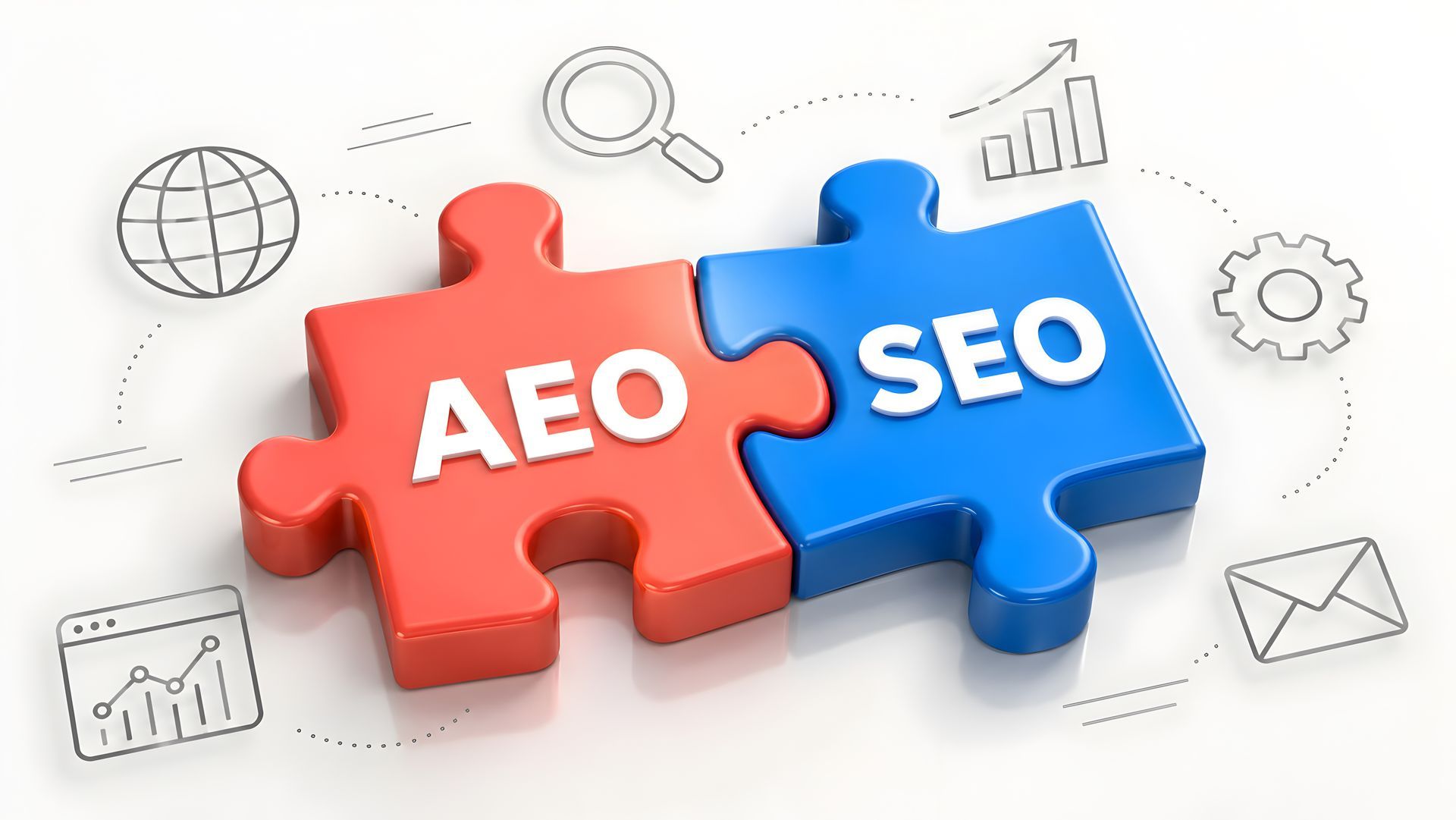
AEO reporting can make AI visibility look more concrete than it really is. Dashboards may show visibility scores, mentions, citations, estimated impressions, share of voice, referral traffic and conversions, but those metrics are not all measuring the same thing.
AEO Reporting Often Starts With a Set of Prompts
Many AEO platforms measure visibility by running a large set of prompts through ChatGPT, Gemini, Google AI Mode and other systems, then recording which brands are mentioned, which websites are cited and which competitors appear.
That can reveal useful patterns, but it is not the same as receiving a complete report of what real users actually asked those platforms.
Some AEO tool developers are trying to make those prompt sets more representative of real behavior. Semrush, for example, says its broader AI visibility database is built from AI-search clickstream data and Google AI Overview keyword data. They then organize and deduplicate those prompts before measuring how brands appear in the resulting answers.
Profound takes a different approach. Its Prompt Volumes dataset comes from double-opt-in consumer panels of active AI users and includes tens of millions of real prompts each month. It uses those conversations to help identify which topics and questions are actually showing demand before marketers decide what to track.
How a platform develops the prompt dataset it uses for testing can significantly influence what its reporting tells you and how useful that data is.
Visibility Metrics Show Where a Business Appears
At the broadest level, AEO platforms can track whether a business appears in AI-generated answers. Common metrics include:
- Mentions: The brand appears in an AI response
- Citations: The company's website is used as a source
- Recommendation presence: The business is actually presented as an option or provider
- Share of voice: How often the business appears compared with selected competitors
These are useful for identifying whether a company is showing up in relevant AI conversations and where competitors may have stronger visibility, but they are not lead metrics.
Estimated Impressions Are Not the Same as Actual Audience Reach
Some AEO dashboards also estimate the size of the audience behind a prompt or topic.
Those numbers can be useful for prioritizing visibility, but they should not be interpreted like Google Search Console impressions.
Ahrefs, for example, estimates AI impressions using Google search volume adjusted for estimated usage of each AI platform. Its own methodology makes clear that those impressions represent estimated potential visibility.
Semrush similarly reports estimated AI volume and monthly audience alongside mentions and citations. Its broader dataset is informed by real AI-search behavior, but the audience figures are still estimates rather than a census of every ChatGPT or Gemini interaction.
What Is Prompt Monitoring and How Is It Different From First-Party Data?
Custom prompt tracking for a roofer might look something like:
- “Who are the best roofing companies in Phoenix?”
- “Which roofers offer financing in Scottsdale?”
- “Should I repair or replace a 20-year-old roof?”
A platform can repeatedly run those prompts and record whether the company appears, whether competitors appear instead and which sources the AI system cites.
This can provide actionable competitive information when you want to know what happens when that prompt is asked. But it does not tell you how often real customers are using that prompt.
AI Referral Traffic Measures an Actual Visit
Referral traffic moves AEO reporting from measured visibility toward actual user behavior.
When someone clicks a link in an AI-generated response and reaches a website, analytics platforms can record that visit.
Google Analytics added a dedicated AI Assistant channel in 2026 that identifies traffic from recognized AI assistants such as ChatGPT, Gemini and Claude, making AI referral traffic much more directly comparable with other sources.
However, analytics only sees the visit when a click occurs, not AI visibility.
There Is No Single AEO Metric That Tells the Whole Story
AEO reporting can provide useful information, but the numbers need to be interpreted according to what they actually measure.
For businesses trying to understand whether their AEO strategy is working, the most useful reporting combines several layers of evidence rather than relying on a single visibility score.
If you would like to learn more about AEO strategies for your website, contact REV77 for a free digital audit.